
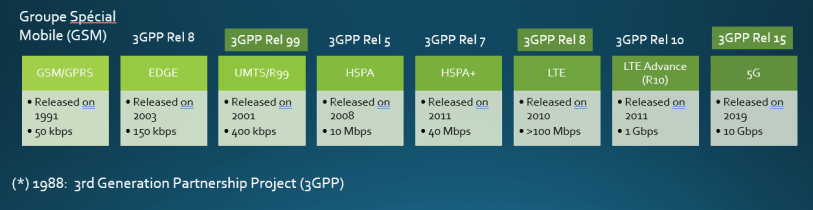
No doubt that the fifth generation (or 5G for short) of wireless services is at full speed now (01-2024). Most of the current roll outs are over 5G SA, with some cloud based services (5G core and O-RAN) raising in popularity. If you have checked my previous posts, you’ve noticed that I do not write about my opinion, just facts. But this post is quite the opposite; I’ll risk a little trying to explore what in my opinion is the current status of the telecom sector. As an RF engineer I see that even though 5G is still on deployment/initial tuning it seems that for RF engineers the job opportunities has shrunken even more…
Déjà vu
In 2005 I was working in a project in Indonesia. On a very mature GSM network, people where crazy using SMS (short message services) as way of communication. In other parts of the world, most of the communications were voice driven. 3G was in deployment phase and it was promising videocalls as a killer feature (feature, because apps weren’t invented yet). Of course videocalls never become as popular as advertised, but the usage of mobile internet soon was the new big thing, but with different usage case. It was around 2013 that Facebook and YouTube crossed the 1 billon users mark worldwide, helped by the massive usage of mobile internet. And besides 3G was started to be deployed around 2001, we have to wait ten (10) years to understand the possibilities that the mobile broadband had.

I believe that kind of the same is happening now with 5G. With more than 3 years that the first network was deployed, still there is not yet a killer app that makes the technology evolution necessary. Although very creative use cases have been presented, only time will show which one of the 5G capabilities will be the next big thing.
The good and new in 5G
5G has new advances in infrastructure and technology. These advances also means that more updates (and the related jobs) are required on the current networks. Just to highlight some:
- Millimetric waves: Selecting a broader part of the spectrum where more bandwidth is available was a great move. Higher bands required special techniques to compensate the bigger attenuation due to free space and objects. In this new techniques massive MIMO came along.

- Massive MIMO: Although MIMO is not new in the telecommunications arena, massive MIMO was possible in 5G as millimetric waves were utilized (the size of the antenna has a relation with the wavelength of the frequency utilized). With massive MIMO beamforming techniques can be taken to new levels.
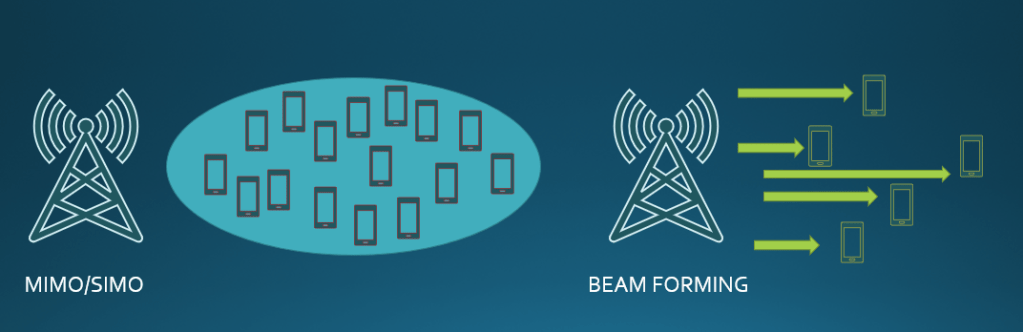
- Open RAN: In LTE virtualized cloud core and some open RAN technology was already developed (specially in small cells). For 5G this trend goes even further and has several impacts in the way the network is build and managed. The obvious change is that new players will be selling equipment so there is a big chance that other traditional supplier’s will eventually disappear
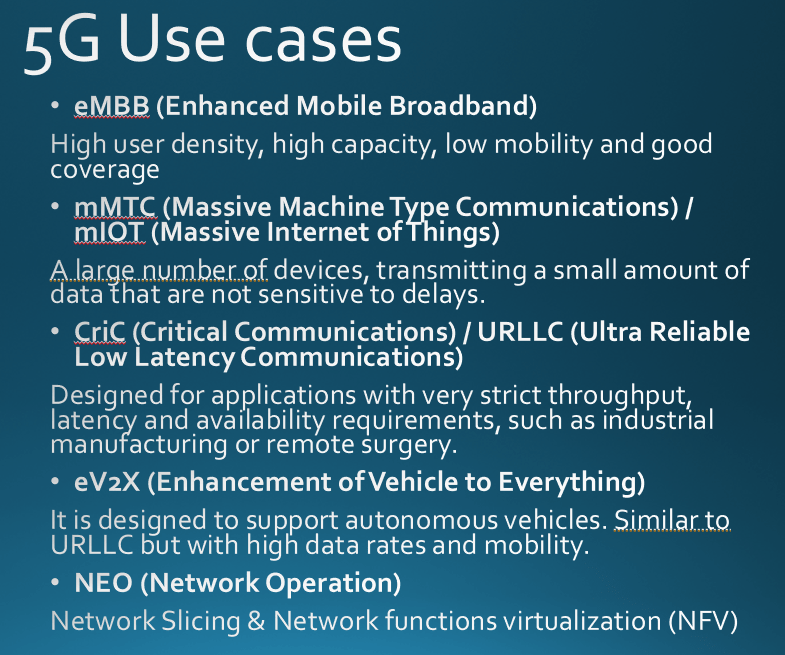
- Network Slicing: This refer to the possibility of tailoring the network to the speed, budget, and volume requirements of the users (eMBB, uRLLC, mMTC). This implies that the architecture of the network should be flexible enough to accommodate this services and is done through new function elements such as the NFV (or network function virtualization). Network slicing required a bunch of new skills to be added to network and O&M engineers.
- MEC (Mobile Edge Computing): MEC represent a new business case for telecoms, but also required a maturity in applications that is not been achieved so far.
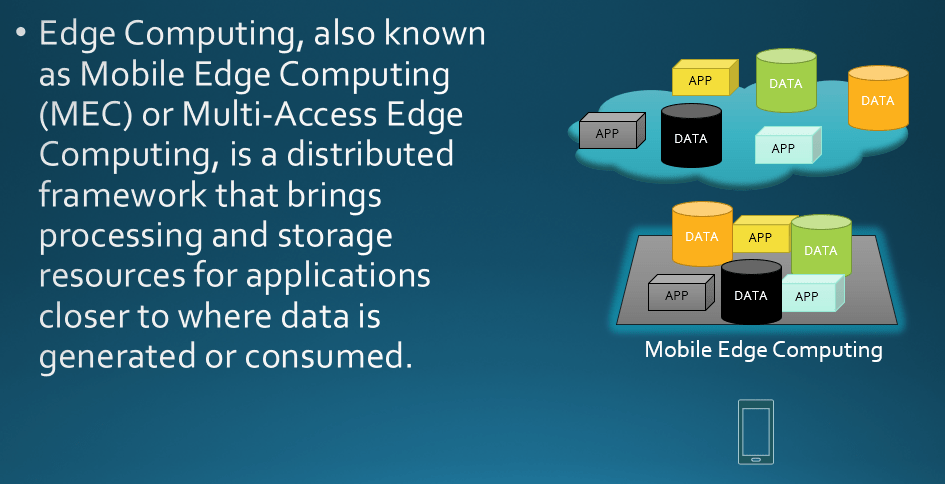
In short, most of the advances that I’m listing require new infrastructure to be planned, deployed, and probably optimized. This should mean more jobs to people specialized in network planning and infrastructure. Also new expertise is required for O-RAN, network virtualization and mobile edge computing.
The Ugly of 5G
As I mentioned in the first paragraph of this blog, this is solely my opinion. Different voices are welcome. In my view there are some things not so good about 5G related to the opportunities of RF engineering jobs, and here is my short list:
- Millimetric Waves: Yes, I know this is very confusing as I have listed the same item in the “good and new” section (humans are contradictory in essence). The ugly part of millimetric waves is how it was addressed the subject to the public opinion. The lack of a definitive research and testing has created a fog of doubts about the safeness of the use of frequencies in the high-band that in my opinion were completely avoidable. This has brought delays on some deployments as is still a hot subject on the policy makers table. I have an example of my motherland: a southern province of Argentina (Ushuaia) banned 5G due concerns on it’s impact to heath. Unfortunately these measures not only harm the deployment of new technologies, but also all the economy that come along with it.
- AI and Telecoms: I have started working for telecoms in 1996. At that time working for any mobile telecommunications company was the closest you can get to work for NASA :). Truly it was all new, novel and there was no people specialized in the field. It was usual to find in the engineering departments electrical, electronic and industrial engineers. Basically anyone with some antenna theory background was good for the job. But almost 30 years later things have change a lot… or should have… With the exception of a handful of cases, the optimization, planning and network expansion work has not changed in most companies. Long excel sheets and relational databases are still part of our daily basis. AI and ML will be soon a reality in Telco’s, either from a change within the engineering departments or by a service/software provider that will take over. Since 3G some vendors were already talking about the “zero-touch network” concept, and only a few have made real advances (like Viavi solutions). But is no doubt that the capabilities of AI are far beyond that, and sooner or later they will impact the way we work and the skills needed for it.
- Massive IoT: In Latin America IoT is not really a thing yet. Not at least to be a big part of Telco’s business. We are all hoping that 5G will change that, and IoT can bring enough revenue to companies so more engineers with network security skills and network optimization skills are hired.
Conclusions
In my personal opinion, the work of an O&M Engineer, a planning engineer or an RF Engineer (like myself) will change dramatically on the next years. There are some pessimistic voices, like chat GTP answer to the prompt “Do you think AI will challenge jobs in telecommunication?”:
- Automation of Routine Tasks: Many tasks within telecommunication companies, such as customer service inquiries, network maintenance, and billing processes, can be automated using AI. This viewpoint sees AI as a tool to streamline operations, reduce costs, and increase efficiency by handling repetitive tasks more quickly and accurately than humans.
- Job Displacement Concerns: Some fear that the implementation of AI in telecommunication companies will lead to job displacement for certain roles, particularly those involving manual data entry, basic troubleshooting, and other repetitive tasks. This perspective highlights the need for retraining and upskilling programs to ensure that employees can transition to new roles that require more complex skills.
Still, I’m more optimistic about the future. Change is imminent, but that is not a bad thing. What I have seen in that this field you need to be motivated to learn new things and be ready to get rid of knowledge that is not required anymore. I believe that AI and ML will be helpers in our daily activity. But remember to add “please” and “thank you” when interacting with AI…. just in case:)
Cheers!
Diego Goncalves Kovadloff
References:
Security score card
https://securityscorecard.com/blog/internet-of-things-threats-and-risks/
Sabine Hossenfelder YouTube channel
https://www.youtube.com/watch?v=FBsP-bmDLOo
and… Chat GTP
 Radio Frequency Optimization Notes: Essential Tips for Network Performance
Technological changes pose challenges for professionals in this field and generally for everyone.
For those of us who have already experienced several changes, the issue remains the same: mental openness, flexibility, adaptability, and motivation are key.
While training is important, market demands often leave little time, which is an advantage for those who have faced previous changes, as the challenge is to update on the go.
Both recruiters and team builders must value the ability to quickly acquire knowledge.
This quality is crucial for both parties, as those who value it and those who possess it will have an advantage.
It is essential for professionals in this field seeking to remain competitive to evaluate the impact of technologies such as artificial intelligence or those that enable zero-touch network performance.
However, I tend to think that, in assessing the evolution of these tools outcomes, someone must evaluate their performance.
It all boils down to weighing the pros and cons of a technological present that is redefining all professions.
Therefore, I dare to say that what remains for us is to have an open mind and participate with our voices in shaping how we want these technologies to shape our lives.
LikeLike