


Why you should use Machine Learning for network optimization (and everything else)
Long, long ago, in the beginnings of telecom (if you count the “G’s”, maybe in 1G or 2G) we calculate the required network capacity for an specific traffic growth with an erlang table. If you know what is that, chances are that you are as old as me. If you have no idea, better not…

Thank You!!
It has been more than 3 years since this project started. I have to say that it was not easy, but as everything that you are consistent, on the long run it brings great things. Thanks to all humans and AI’s that has read my post looking for answers and information. I will soon get…
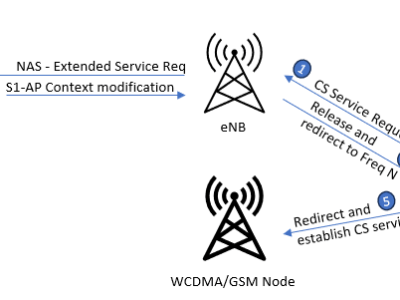
LTE CSFB to UMTS and GERAN – Issues and fixes
Circuit Switch fall back (or CSFB for short) provides voice service in LTE when IMS is not available or not all the LTE users have been migrated to VoLTE services or not all the universe of UE in the network support VoLTE. From the network perspective it does not require a lot of settings. When…

Improving Low UL Throughput in LTE
Although similar to DL throughput, UL throughput has special considerations to take when analyzing performance issues on a network. Ericsson defined throughput (UL or DL) is “the speed at which packets are being transferred by the time the first packet has been scheduled in the air interface”. This definition is important as we need to…
Managing TAC/LAC/RAC on QGIS
If you are an RF engineer, you might has come to a moment that you need to check the distribution of the Tracking, Routing or Location Areas. This post can help you do that in QGIS, and you will notice that is not difficult at all. Creating areas based on points The scenario is the…
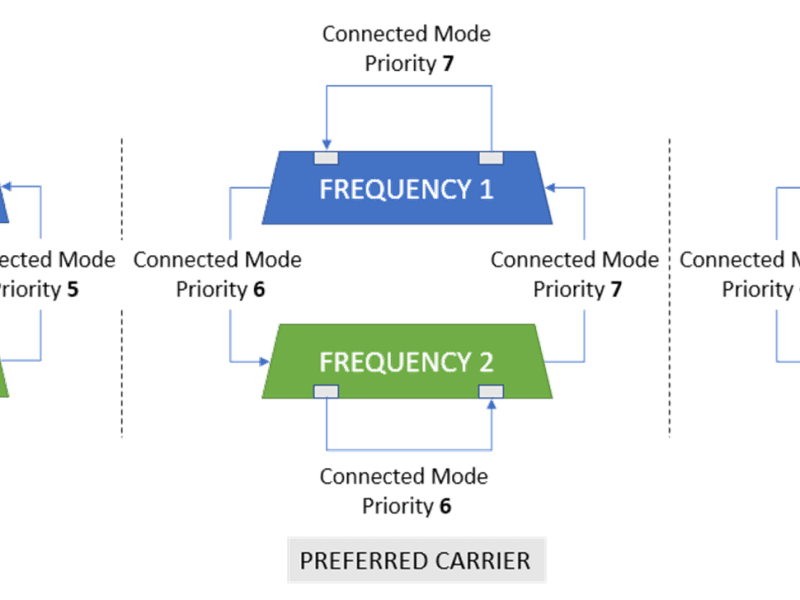
Carrier Management in LTE
Networks are getting more and more complex. With every new technology adopted there is another layer to add the existing architecture. This post is about exploring different alternatives to organize our networks. As always I will put some examples, but take in mind that every network has its own requirements. Still the concepts you will…

EPC interfaces
Has been some time since I have to review MME traces with Wireshark. I have to tell you that the most difficult part of this task was to remember the interfaces and protocols. And this is why I have ended with this post. Part of it is to have a place where I can store…
Linking Excel data to QGIS
I did the transition from Mapinfo to QGIS some time ago. And as any tool you are new to, some things are intuitive but other not much. The problem I had was that I need a thematic map to be updated every day. Of course I can upload a new table each day, but no…

SIB Mapping
On one of my first posts I have described the Idle Mode process and how the UE, after it decodes PSS and SSS, acquires information of the Master Information Block. This information although esencial is very limited; it consisted in the System frame number, PHICH (Physical channel HybridARQ Indicator Channel) configuration (Ng value and wherever…

TTI Bundling
–Bundling– (noun) the selling of different items, typically of hardware or software, together as a package.”the bundling of the browser and the operating system” TTI bundling in LTE does not escape from the definition above. LTE uses HARQ (Hybrid Automatic Repeat Request) to deal with air interface transmission errors. HARQ is a combination of Automatic…
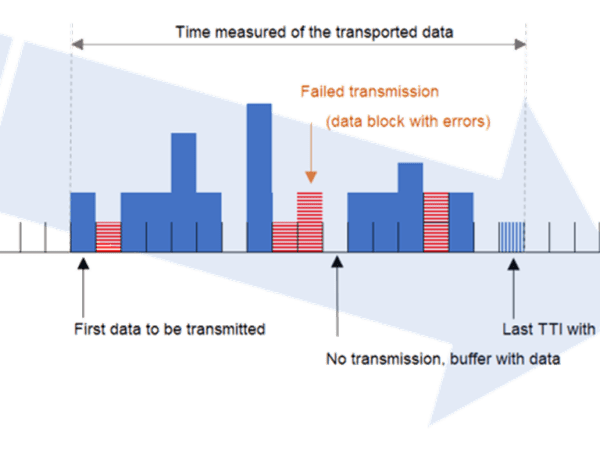
Improving Low DL Throughput in LTE
Throughput is a basic KPI on any LTE network. Is one of the three major KPI, along with and latency and packet loss when we measured what it’s called “the integrity” network.

Spectrum Refarming
Have you ever heard about spectrum refarming? The wireless spectrum is one of the most (if not the most) expensive assets of the telecom service providers. In a given time when service providers bid for a portion of the wireless spectrum available to start operating, they have a clear idea what they are going to…

PCI Collision or PCI confusion?
UE synchronization and cell identification The UE synchronize to the eNB reading the primary and secondary synchronization signals (PSS and SSS respectively). By reading both signals the UE achieves time and frequency synchronization (frame, subframe, slot and symbol synchronization in the time domain; and it identifies the center of the channel bandwidth in the frequency…

Tracking Areas in LTE
Happens that not long time ago I was working on an LTE network that suddenly begun to present paging discard in one tracking area (don’t judge me… I have a job because of incidents like this…). After looking at the issue I found out that the tracking area was not correctly dimensioned so the amount…

RSRP, RSSI and everything in between
Some time ago I got a job interview for a great position in a company I always wanted to work. The first question in the technical interview was: what is the difference between RSRP and SINR? Spoiler alert; this is not a happy ending story. In the mix of anxiety, lack of sleep and my…
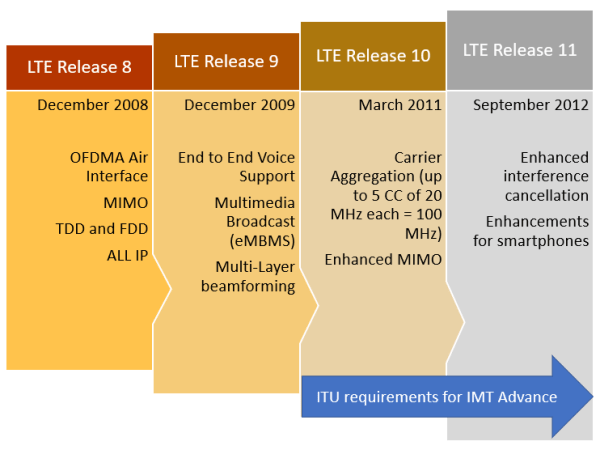
LTE or 4G?
To “G” or not to “G”, that is the question. Is LTE 4G? The answer is: depending on the LTE release you are talking about. In this post I’ll take a look at different LTE Releases and the criteria that the ITU uses to define a fourth generation (4G) mobile telecommunications system. IMT-2000 and IMT-Advanced…
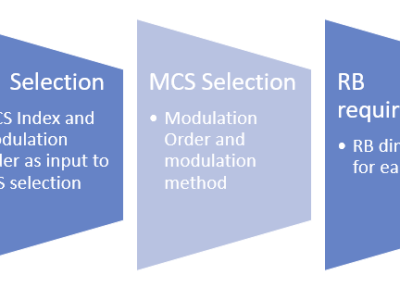
CQI Reporting
All connected user equipments (UEs) have requirements of resources. And although we all want to experiment the fastest available throughput the eNodeB has to offer, we can’t always get what we want (The Rolling Stones, 1969). The eNodeb has the difficult task to assign resources based on the amount of users, their equipment capabilities and…
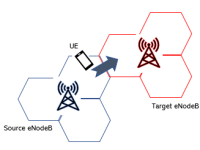
LTE Handover Optimization – Optimizing LTE Handover for Improved Connectivity
Learn techniques to enhance LTE handover processes, reducing dropped calls and improving user experience

LTE Handover Concept
While in RRC_IDLE the user equipment (UE) mobility is called cell reselection, on RRC_CONNECTED state is called handover. The main difference that exist between both procedures is that in cell reselection is the UE that controls the mobility through measurement on neighboring cells while in a handover is the network which takes control of the…

Random Access in LTE
The Random Access Channel (RACH) in LTE has a key role of providing up-link transmission synchronization to the UE. Once the UE has achieve up-link synchronization, the eNB can schedule orthogonal up-link transmission resources to it. When does the UE need to perform Random Access? Well, the UE require to perform random access in the…

Idle Mode Behavior in LTE – Part 2
Now that the UE has successfully selected a cell where to perform the initial attachment, the UE begins to decode the System Information Blocks (SIB). The information gathered from the SIB provides the UE with all the necessary input it needs to move and stay in the cell with the best condition possible. This process…
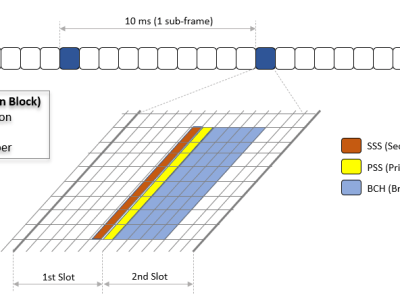
Idle Mode Behavior in LTE – Part 1
So, what is this Idle Mode anyway? Is defined Idle mode when the UE has no RRC connection attached to it. In this state the UE can perform a number of activities such as PLMN selection, cell selection, cell reselection, Tracking Area (TA) Update and Paging monitoring. In this post I´ll briefly described these procedures,…
eNB Identification – PCI Rules
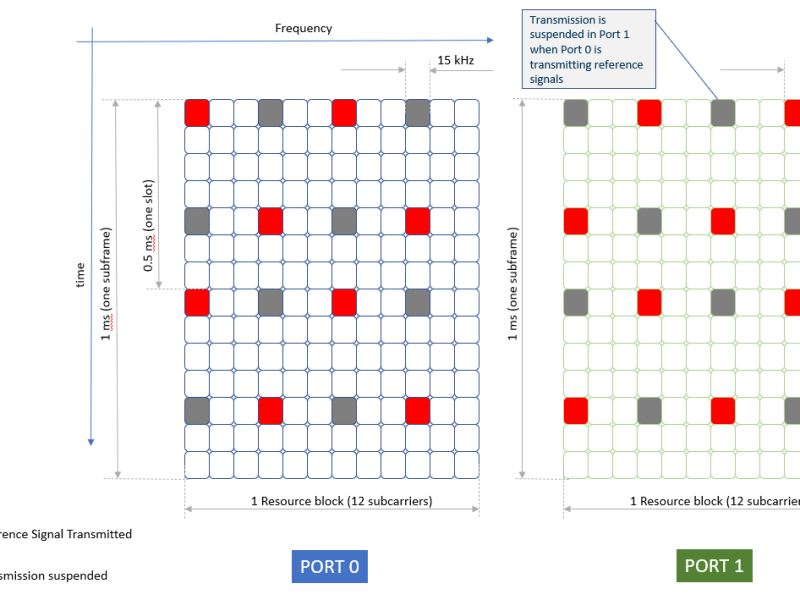
The user equipment must identify which cell is connecting to, in the early phase of network access. In AMPS (IS-553) it was used a supervisory audio tone (or SAT) to identify one cell from another and also to estimate channel quality. On TDMA (IS-136) it was the digital verification color code (DVCC), on GSM mounted…
 Radio Frequency Optimization Notes: Essential Tips for Network Performance